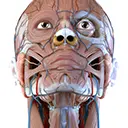

In the past, learning anatomy posed significant challenges for medical students and professionals. Reliant on cadavers and textbooks, these individuals sought to understand the intricate anatomy of the human body. However, the rise of modern technology has dramatically transformed our approach to anatomy education. Medical professionals now harness the power of advanced applications, which offer 3D imaging and virtual simulations, granting them an enriched understanding of the body's complex structures. This post delves into the transformative journey of anatomy learning from cadavers to the realm of 3D apps.
The Evolution of Anatomy Learning: From Cadavers to 3D Apps
The traditional anatomy learning method, primarily involving cadaver dissection, remains prevalent in numerous medical schools. Though dissecting cadavers is undoubtedly an enriching way to learn anatomy, it's not without its limitations. The process is costly, labor-intensive, and accessibility varies. Additionally, cadavers may not consistently portray the array of anatomical nuances and variations that medical professionals could encounter in real scenarios.
One monumental leap in recent anatomy education is the advent of 3D imaging technology. Medical experts now employ cutting-edge software and tech tools to fashion 3D replicas of the human form. These models not only emulate human anatomy in detail but also offer insights far surpassing traditional means. What's more, combining these applications with virtual reality tools births an unparalleled immersive learning experience for medical aficionados.
The domain of anatomy learning also witnessed the inception of computerized simulations. Presently, computers can fabricate lifelike replications of physiological processes, ushering medical professionals into an unprecedented engagement realm with the body. Medical learners can interface with these models, fostering a profound comprehension of human anatomy and physiological processes. Tailoring these simulations to showcase system abnormalities or disorders equips medical professionals with enhanced diagnostic acumen, facilitating a more profound grasp of disease evolution in humans.
In today's digital epoch, an array of mobile applications exists, serving medical professionals with a fresh anatomy learning perspective. Flaunting 3D graphics and interactive videos, these apps promise learners an immersive, self-paced educational voyage. The convenience of these applications ensures that students can delve into anatomy studies irrespective of time or place.
Conclusion:
The metamorphosis in anatomy learning methods has unlocked avenues for medical experts to decode human anatomy with unprecedented accuracy. Technological strides have radically redefined the paradigm of anatomy education. By leveraging 3D imagery, virtual simulations, and interactive tools, the learning experience is not only elevated but also deepens comprehension of human body intricacies. Despite these advancements, the importance and value of cadavers in gleaning granular insights into human anatomy remain undiminished.
Experience the future of medical learning today! Download our Visual Anatomy 3D app and immerse yourself in the intricate world of human anatomy wherever you are, whenever you want. Don't just learn; understand, explore, and conquer the complexities of the human body with Visual Anatomy 3D.
The VisualAnatomy3D application can be downloaded for free from the iOS App Store, Google Play, or the Microsoft app store.